How Denim Fabric Is Made
A finished roll of denim is the result of several connected production stages.
From yarn selection and dyeing to weaving, finishing and inspection, each stage can influence the fabric’s color, construction, hand feel, shrinkage, stretch and overall performance.
For apparel brands, garment manufacturers and sourcing teams, understanding the basic denim manufacturing process makes it easier to evaluate fabrics, communicate specifications and manage custom development and bulk production.
The exact production route may vary depending on the construction, dyeing method and required performance, but the following steps provide a practical overview of how denim fabric is made.
1. Fabric Specification and Yarn Selection
Denim production begins before the fabric reaches a loom.
The first step is to define the target fabric specification. Depending on the project, this may include:
- Fiber composition
- Fabric weight
- Finished width
- Weave construction
- Stretch level
- Target color
- Hand feel
- Shrinkage requirements
- Intended garment
- Garment wash or finishing process
Once the target is clear, suitable yarns can be selected.
Fiber composition, yarn count and yarn structure all affect the appearance and performance of the finished denim.
Traditional denim is often based on cotton, while modern constructions may also incorporate polyester, elastane, rayon or other fibers depending on the required performance.
Yarn technologies can also be used to create different visual effects and fabric characteristics.
For example, changes in yarn thickness or structure can contribute to slub effects, surface texture, softness or strength.
For custom denim development, choosing the appropriate yarn is one of the first steps toward achieving the desired fabric.
2. Warping and Yarn Preparation
Before weaving, warp yarns must be arranged and prepared for the production process.
During warping, a large number of yarn ends are organized into a controlled sheet under consistent tension.
Good tension control is important because uneven yarn preparation can influence later stages such as dyeing and weaving.
The preparation route can vary depending on the dyeing system and fabric being produced, but the overall objective is the same: to create a stable and uniform warp that can move efficiently through production.
For the mill, controlling yarn preparation helps reduce irregularities before they become visible in finished fabric.
3. Indigo Dyeing
Color is one of the defining characteristics of denim.
For traditional blue denim, the warp yarns are usually dyed with indigo while the weft yarns remain lighter or undyed. The contrast between the colored warp and lighter weft helps create denim’s familiar appearance.
Indigo is also known for its distinctive fading behavior.
Unlike many dyes that penetrate deeply into the fiber, indigo tends to remain closer to the yarn surface. During garment washing and wear, part of this color can gradually be removed, allowing denim to develop characteristic fades and wash effects.
Different dyeing methods and process conditions can influence:
- Shade depth
- Color consistency
- Surface appearance
- Wash-down behavior
- Final garment appearance
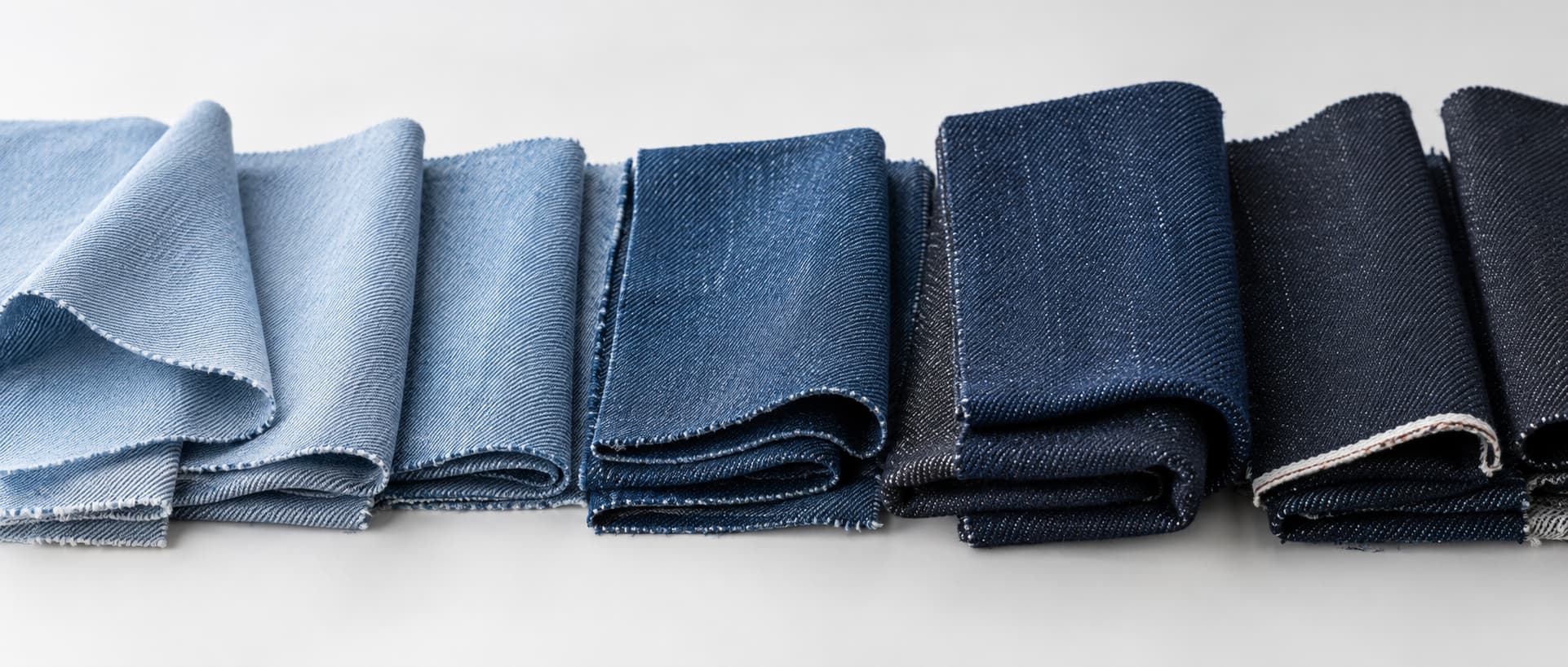
Deep indigo, medium blue, light blue, black, grey and other denim colors can all require different production approaches.
For professional buyers, shade control is particularly important.
A development sample may look correct, but the same shade must also be reproduced within an acceptable range during bulk production.
For this reason, color approval and shade consistency are important parts of denim fabric development.
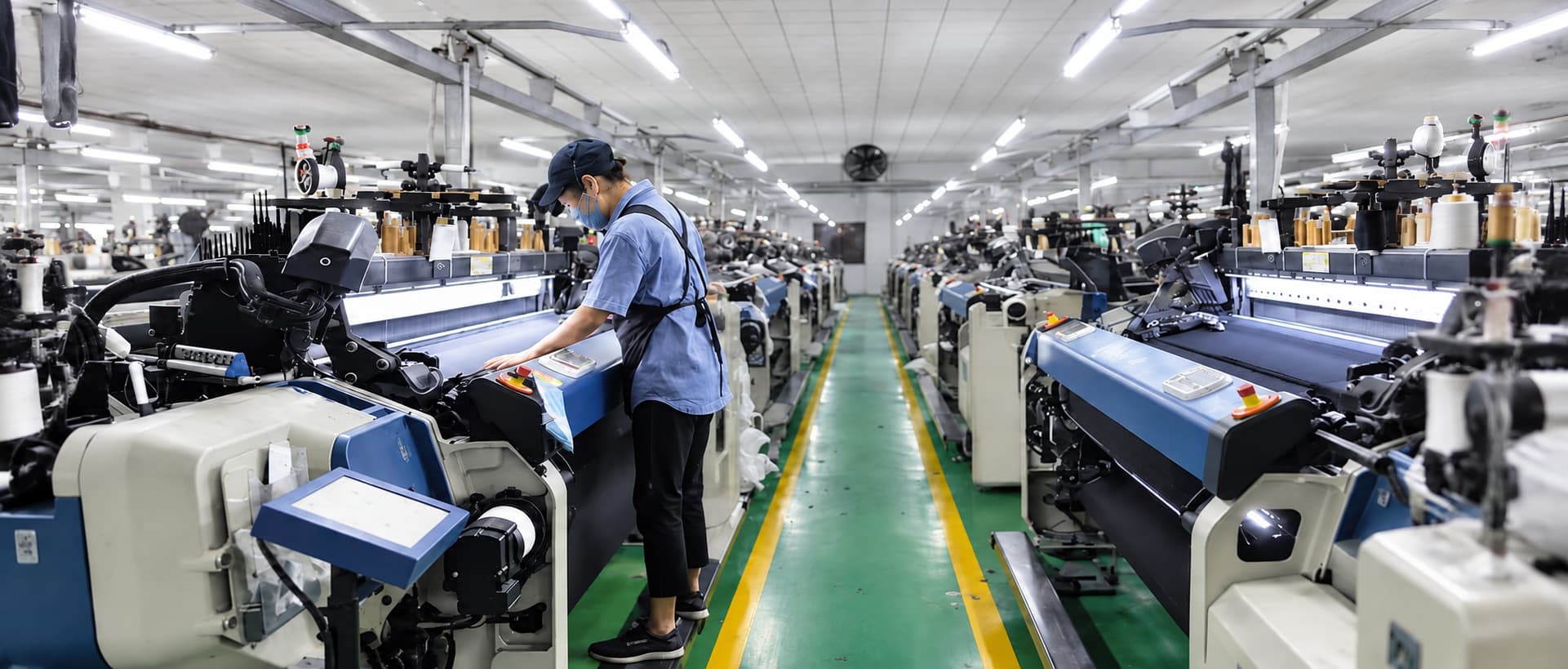
4. Weaving
After yarn preparation and dyeing, the warp and weft yarns are woven together to create denim fabric.
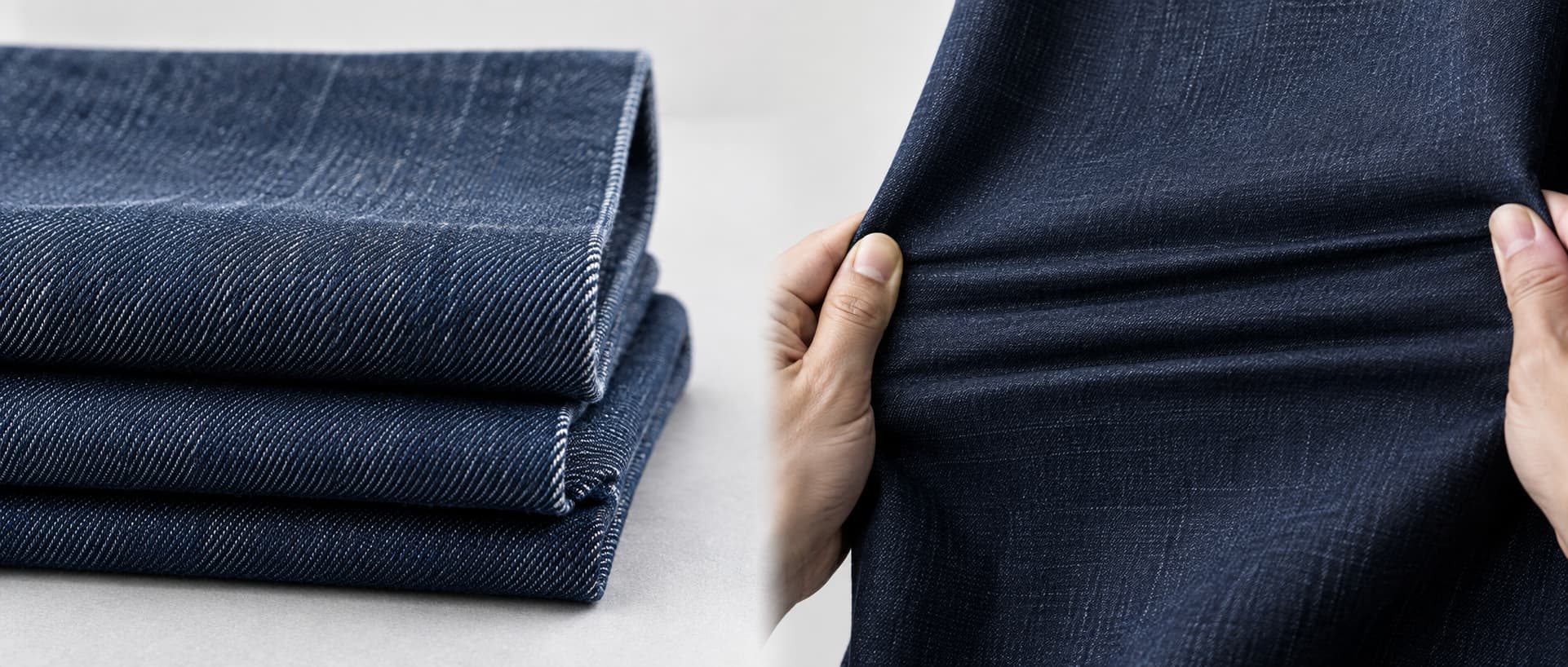
Many classic denim fabrics use twill constructions.
A 3/1 right-hand twill is one familiar example, but denim can also be produced using left-hand twill, broken twill and other constructions.
The weave structure has a significant influence on the finished fabric.
It can affect:
- Surface appearance
- Fabric strength
- Weight
- Drape
- Hand feel
- Washing behavior
Yarn selection also works together with the weave construction.
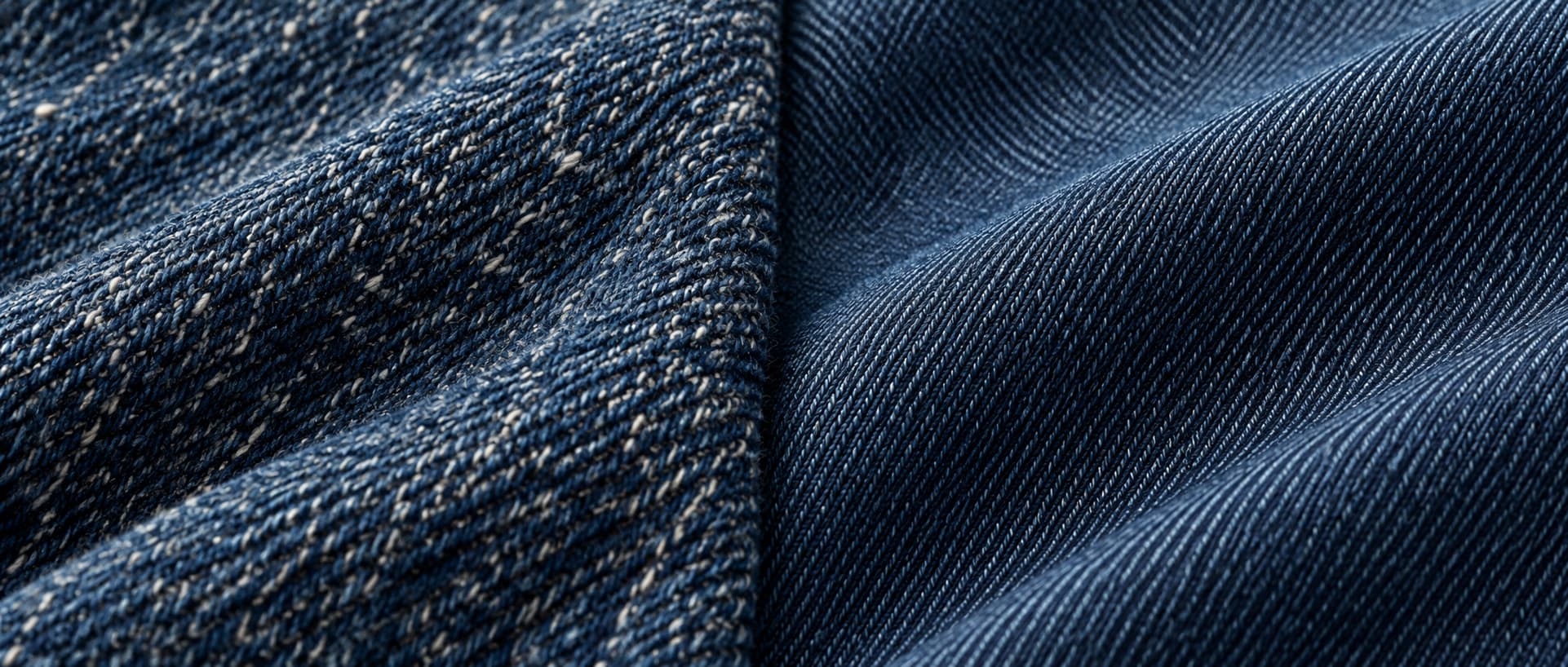
For example, slub yarns can create visible variations along the fabric surface, while different yarn combinations can produce crosshatch or other textural effects.
This is one reason why two denim fabrics with the same composition and similar weight can still look and perform very differently.
A specification such as “98% cotton, 2% elastane, 10 oz” only describes part of the fabric.
Construction, yarn choice, density, finishing and process control can make a substantial difference to the final result.
5. Fabric Finishing
Freshly woven denim is not always ready for garment manufacturing.
After weaving, the fabric normally goes through finishing processes designed to control its dimensions, appearance and hand feel.
Depending on the product specification, finishing may influence:
- Finished width
- Shrinkage
- Dimensional stability
- Surface appearance
- Softness
- Hand feel
- Fabric performance
Processes may include sanforizing, softening and other mechanical or chemical treatments depending on the required product.
The finishing route should be selected according to the intended garment and the desired final result.
For example, denim intended for jeans may require different characteristics from lightweight denim developed for shirts, dresses or fashion garments.
Finishing also matters because the fabric must perform predictably during later stages such as cutting, sewing and garment washing.
For buyers, this means that hand feel and appearance should not be considered separately from production performance.
6. Fabric Inspection and Quality Control
After finishing, the denim is inspected against the agreed specification.
Fabric inspection helps identify visible defects and evaluate consistency before the material is prepared for shipment.
Depending on customer requirements, quality checks may include:
- Fabric width
- Fabric weight
- Shade
- Construction
- Surface appearance
- Shrinkage
- Stretch
- Recovery
- Physical performance
- Visible fabric defects
Additional laboratory testing may also be carried out depending on the target market, garment application and agreed standards.
For bulk orders, consistency is especially important.
A buyer does not only need one good fabric sample. The objective is to maintain an acceptable level of consistency across multiple rolls and production lots.
This is why quality control is an important part of commercial denim production.
7. Rolling, Packing and Preparation for Shipment
Once the finished denim has passed the required inspection, it is rolled and prepared for delivery.
Roll identification and packing information help customers manage the fabric when it arrives at a garment factory or warehouse.
Depending on the order, requirements may include:
- Roll identification
- Roll length
- Packing method
- Labels
- Shipping marks
- Order references
- Documentation
Finished rolls can then be prepared for local delivery or export shipment according to the customer’s requirements.
Although packing may seem like a simple final step, clear roll identification is important for receiving, storage and garment production.
Why the Denim Manufacturing Process Matters to Buyers
When sourcing denim, it is easy to compare fabrics only by composition and weight.
However, these numbers do not tell the complete story.
Two fabrics can have similar compositions and similar ounce weights while producing very different results in the final garment.
The difference may come from:
- Yarn structure
- Weave construction
- Dyeing
- Fabric density
- Finishing
- Stretch performance
- Process control
Understanding the production process helps buyers evaluate denim more accurately.
It also makes communication with the fabric manufacturer more efficient.
Instead of simply requesting “10 oz stretch denim,” a buyer can provide more information about the intended result.
What Information Should Buyers Provide for Denim Development?
For custom development, the mill does not necessarily need the buyer to define every technical production parameter.
What matters most is understanding the required end result.
Useful information may include:
- Desired composition
- Target weight
- Required width
- Stretch requirement
- Color or shade reference
- Hand feel
- Garment type
- Target garment wash
- Performance requirements
- Target market
- Estimated order quantity
A physical fabric swatch, garment sample or reference image can also help communicate the target.
For example, a buyer developing denim for skinny jeans may prioritize stretch and recovery, while a rigid denim program may focus more on authentic surface character, structure and wash-down behavior.
By understanding the garment application, the denim mill can recommend an existing construction or develop a new option around the customer’s requirements.
From Development Sample to Bulk Production
Fabric development is only one part of the sourcing process.
For commercial orders, the development must also be suitable for repeatable production.
A successful denim program should consider not only whether the initial sample looks good, but also whether the required specifications can be maintained during bulk manufacturing.
Important considerations may include:
- Shade consistency
- Fabric weight tolerance
- Width
- Shrinkage
- Stretch and recovery
- Surface appearance
- Roll-to-roll consistency
This is why communication between the buyer, garment manufacturer and denim mill is important throughout the development process.
The earlier the target requirements are defined, the easier it becomes to select an appropriate construction and production route.
Developing the Right Denim for Your Product
Denim manufacturing combines yarn selection, dyeing, weaving, finishing and quality control.
Each stage contributes to the appearance and performance of the finished fabric.
For apparel brands and garment manufacturers, understanding these stages can make denim sourcing more efficient and help reduce misunderstandings during development and bulk production.
At Shengfang Denim Mill, we develop and manufacture denim fabrics across different compositions, weights, constructions, colors and stretch requirements.
If you are developing a new denim program, you can send us your target specification, reference fabric or garment requirement. Our team can help recommend an existing fabric or discuss a custom development.